

Facial Rejuvenation Case Study: Addressing Tired Eyes, a Sagging Neck, and Loss of Facial Definition
This case study describes one patient's individual experience at Shire Facial Plastic Surgery in Chattanooga, Tennessee, under the care of Dr. James R. Shire, a double board-certified facial plastic surgeon. The patient felt healthy and energetic, but her eyes, neck, and lower face were making her appear more tired than she felt. After a comprehensive facial evaluation, Dr. James R. Shire recommended a balanced surgical plan that addressed the brows, lower eyelids, jawline, and neck together rather than treating one concern in isolation.
Case Snapshot
- Procedure: Brow lift, lower eyelid surgery, and lower facelift
- Primary concerns: A tired appearance, under-eye bags, brow descent crowding the upper eyelid area, early jowling, a pre-jowl notch, neck laxity, neck banding, and deepening marionette lines.
- Surgical support: A combined surgical plan using brow repositioning, lower eyelid refinement, and lower facial tissue elevation to address the patient’s tired appearance from multiple contributing areas rather than treating the eyes or neck alone.
- Overall goal: To help the patient look more rested, refreshed, and naturally youthful by opening the eye area, reducing under-eye puffiness, restoring smoother jawline definition, and improving neck contour.
- Documented Recovery: The patient recovered well and was happy with her results, based on this patient’s individual recovery.
Patient Concern
This patient came to Dr. James Shire, a facial plastic surgeon in Chattanooga, TN, with a concern he hears frequently: "I just look tired."
Although she felt healthy and energetic, she was increasingly bothered by the appearance of her eyes and neck. She felt her facial appearance no longer reflected how vibrant she felt on the inside and wanted a natural-looking solution that would help her look more rested and refreshed.
Her concern is a common reason patients consider facial rejuvenation. The area around the eyes can create the first impression of fatigue, while changes along the jawline and neck can make the lower face look heavier or less defined. In this case, the goal was not to create a different-looking face. It was to help the patient look more aligned with how she felt.
Dr. Shire's Facial Evaluation Assessment
A comprehensive facial evaluation revealed several age-related changes contributing to her tired appearance.
Dr. Shire noted:
- Early jowling that was obscuring the natural jawline
- A pre-jowl notch that created a squared appearance in the lower face
- Deepening marionette lines extending from the corners of the mouth
- Banding and laxity in the neck
- Puffiness and bags beneath the eyes
- Descent of the eyebrows that was crowding the upper eyelid area
Interestingly, her upper eyelids themselves had very little excess skin. Instead, the brows had gradually descended over time, reducing the distance between the eyebrows and eyelashes and contributing to a heavier, more fatigued appearance around the eyes.
This distinction is clinically significant. Brow descent and excess upper eyelid skin can produce similar outward signs of aging, but they require different surgical approaches to correct. Identifying the true anatomical cause of the problem is what allows the treatment plan to address the right issue. A brow lift, not upper eyelid surgery, was the appropriate choice in this case.
The identification of the pre-jowl notch as a distinct contributing factor also reflects Dr. Shire’s nuanced understanding of lower facial aging. This anatomical structure, where the jaw curves inward just ahead of the jowl, creates a shadowing and squaring effect that worsens the appearance of jowling. Dr. Shire has published research specifically on the role of this structure in facelift planning, making its recognition here a marker of careful, individualized surgical assessment.
Treatment Plan and Surgical Approach
After discussing her goals, Dr. Shire recommended a comprehensive facial rejuvenation procedure that addressed all of the underlying causes of her tired appearance in a single surgery.
The plan combined procedures that supported one another visually. A brow lift addressed brow descent and upper-eye heaviness, lower eyelid surgery addressed under-eye bags and puffiness, and a lower facelift addressed the jawline, marionette lines, and neck laxity.
Brow Lift
The brow lift restored the eyebrows to a more youthful position, opening the upper eye area and creating a brighter, more refreshed appearance.
For this patient, the brow lift was important because the heaviness around the upper eyes was not primarily caused by excess upper eyelid skin. Repositioning the brows helped address the source of the crowded appearance while supporting a natural, rested look.
Lower Eyelid Surgery
The lower eyelids were treated to remove under-eye bags and puffiness, helping eliminate one of the most common signs of fatigue.
In general, lower blepharoplasty may address puffiness, under-eye bags, or lower eyelid contour concerns, depending on the patient's anatomy and surgical plan. In this case, the lower eyelid portion of the procedure focused on the puffiness and bags that were contributing to the patient's tired appearance.
Lower Facelift
A lower facelift was performed to reposition descended facial tissues, improve jawline definition, soften marionette lines, and tighten the neck.
A lower facelift specifically targets the lower third of the face, the area most affected by jowling, pre-jowl notching, marionette lines, and neck laxity. By repositioning the underlying tissue structures rather than simply tightening the skin, the procedure restores a more natural jawline contour with results that are sustainable and look balanced over time.
By combining these procedures, Dr. Shire was able to rejuvenate the upper face, eyes, lower face, and neck in a balanced, harmonious way.
Recovery and What to Expect
Recovery from combined facial rejuvenation surgery varies from patient to patient and is shaped by the specific procedures performed, individual anatomy, the body's healing response, and adherence to surgeon-provided aftercare instructions. Patients typically experience some swelling, bruising, and a sensation of tightness in the treated areas during the initial recovery period. Most patients find they are comfortable returning to light, non-strenuous activity within one to two weeks, though this varies significantly.
The full appearance of results continues to evolve as swelling gradually subsides over the weeks and months following surgery. During your consultation, Dr. Shire will discuss what recovery is likely to look like given your specific situation, what activities to avoid and when you may resume them, and what follow-up appointments will be scheduled to monitor your healing.
Results
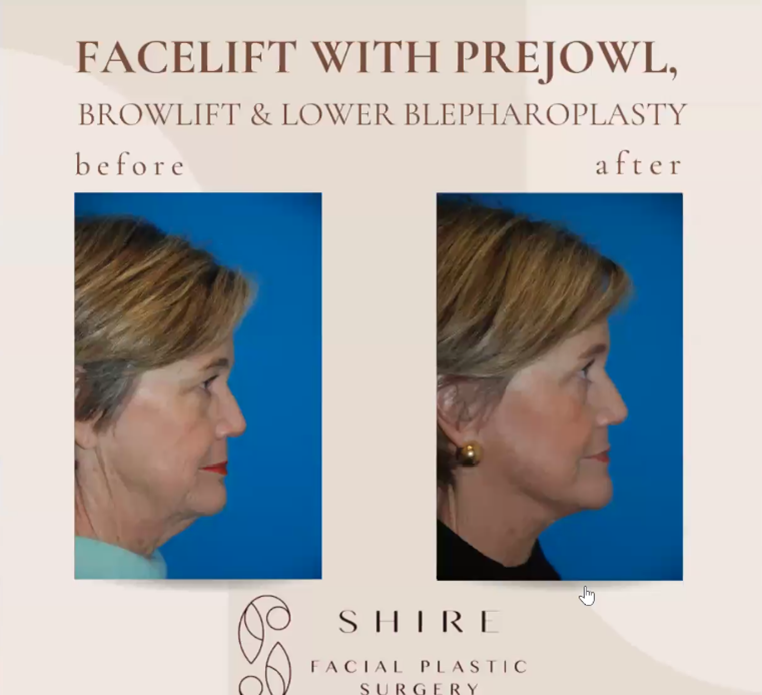
Following recovery, the patient appeared noticeably more rested, refreshed, and youthful. The eyes looked brighter and more open, the under-eye bags were eliminated, and the jawline regained a smoother, more defined contour.
The neck appeared tighter, and the heaviness caused by jowling and marionette lines was significantly improved.
Most importantly, the results looked natural. Rather than appearing like someone who had undergone cosmetic surgery, she simply looked like a more refreshed version of herself.
These result descriptions apply only to this patient. Before-and-after images are presented as an example of a single individual's outcome and not as a guarantee of what another patient will experience.
Outcome
This case demonstrates how multiple age-related changes can work together to create a tired appearance, even when a patient feels great. By addressing the brows, lower eyelids, jawline, and neck simultaneously, Dr. Shire was able to create comprehensive facial rejuvenation that restored balance and harmony throughout the face.
The patient recovered well and was extremely happy with her results, feeling that her appearance once again reflected the energy and confidence she felt every day.
This version tells the story that the patient thought her eyes and neck were the problem, but Dr. Shire identified the brow position, lower eyelids, jawline, and neck as contributing factors and addressed them comprehensively for a natural result.
For prospective facial rejuvenation patients, the main takeaway is that the area that seems most noticeable in the mirror may not be the only source of the concern. A detailed facial assessment can help determine whether the brows, eyelids, jawline, neck, or a combination of areas should be considered.
What This Case May Mean for Prospective Patients
This case illustrates a clinical reality that many prospective facial rejuvenation patients encounter: the visible signs of aging are not always where they appear to originate. This patient primarily focused on her eyes and neck, and those were indeed concerns that Dr. Shire addressed. But the evaluation also revealed that the position of her brows, not excess upper eyelid skin, was a primary contributor to the heaviness around her eyes. Without that distinction, the surgical plan would have been different, and the results would likely have been less complete.
For prospective patients, a few considerations emerge from this case. First, the right surgical plan depends on careful, individualized assessment rather than on the procedures a patient already expects to have. Second, when medically appropriate, comprehensively addressing the underlying anatomical causes of facial aging in a single surgery can produce more harmonious and balanced results than treating individual areas in isolation. Third, the goal of this type of surgery is not to change how a person looks, but to help the face reflect the energy and confidence the patient already feels.
Patients considering similar concerns are encouraged to schedule a consultation so that Dr. Shire can evaluate their specific anatomy, discuss the available options, and help them understand what approach may be appropriate for their individual situation. Results vary from patient to patient based on anatomy, the specific surgical plan, and individual healing.
Why Patients Choose Dr. James R. Shire
Dr. James R. Shire is a double board-certified facial plastic surgeon with over 35 years of experience performing cosmetic and reconstructive procedures of the face and neck. He holds board certifications from the American Board of Facial Plastic and Reconstructive Surgery and the American Board of Otolaryngology-Head and Neck Surgery, and he completed his fellowship training in Facial Plastic and Reconstructive Surgery at Tulane University.
Dr. Shire's background includes published research in peer-reviewed surgical literature, including a paper on the role of the pre-jowl notch in facelift planning in the Facial Plastic Surgery Clinics of North America. That specific area of surgical nuance featured directly in this patient's care, reflecting the connection between his research background and his clinical approach.
At Shire Facial Plastic Surgery in Chattanooga, Tennessee, Dr. Shire performs all procedures personally and takes a one-on-one approach with each patient from initial consultation through recovery. His practice serves patients from Chattanooga, Nashville, Knoxville, Atlanta, and surrounding areas.
Schedule a Consultation
If you are considering facial rejuvenation and would like to learn more about brow lift surgery, blepharoplasty (eyelid surgery), or facelift surgery in Chattanooga, we invite you to schedule a personal consultation with Dr. Shire.
During your consultation, Dr. Shire will evaluate your specific anatomy and goals and discuss which approach may be appropriate for your individual situation. Every patient's plan is developed based on their unique anatomy, concerns, and expectations.
Call Shire Facial Plastic Surgery at (423) 870-3223 or request a consultation online to get started.
Disclaimer
This case study describes one patient's individual experience with facial rejuvenation at Shire Facial Plastic Surgery in Chattanooga, Tennessee, under the care of Dr. James R. Shire. The procedures discussed include lower facelift, brow lift, and lower blepharoplasty. Results are not typical and vary from patient to patient based on anatomy, the specific surgical plan, individual healing, and other factors. This content is for informational and educational purposes only and does not constitute individualized medical advice. Individuals considering facial rejuvenation should schedule a consultation with a qualified facial plastic surgeon to determine whether any procedure is appropriate for their specific anatomy, health history, and goals. Any before-and-after images reflect individual patient outcomes only and do not guarantee similar results.